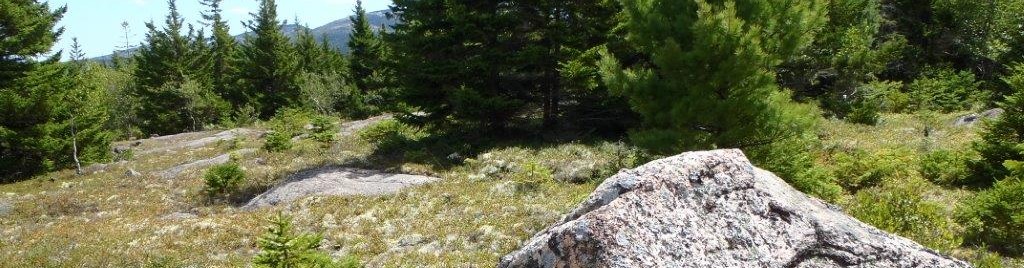
A federal judge in Massachusetts is ordering the Trump administration to reinstall signs that warn of climate change at Acadia National Park, and that mark the significance of Cadillac Mountain to the Wabanaki people, saying their removal set a dangerous precedent of censorship.
The signs at Acadia were among hundreds of interpretive materials removed by the administration of President Donald Trump from national parks across the country in a move partly aimed at eliminating “improper partisan ideology” at parks. Six signs were removed from Cadillac and four from the Great Meadow.
US District Court Judge Angel Kelley also is prohibiting the administration from removing any more signs or interpretive materials at National Park Service sites. She wrote that the actions set “a dangerous precedent of censorship and sanitization” of climate change at Acadia and educational materials at other national parks.

Signs about climate change at Acadia and the significance of Cadillac to the Wabanaki people, squirreled away behind a building along with old canoes and toilets after a 2025 Trump administration order, may soon be restored atop Cadillac and along the Great Meadow.
Interior and NPS get 21 days to restore signs at national parks
In a 63-page decision released on Friday, Kelley gave the administration 21 days to restore and reinstall certain interpretive materials at park sites managed by the NPS including those of climate change at Acadia. Under a May 20, 2025 order by Interior Secretary Doug Burgum, the signs and other items were altered, removed, or damaged in the process of removal, the judge wrote.

US District Court Judge Angel Kelley (Photo courtesy of US District Court)
Kelley acted on a lawsuit filed by a coalition that sued the Interior Department and the National Park Service.
Kelley wrote that the government, for example, has torn down exhibits in Philadelphia’s Independence National Historical Park memorializing the legacy of people enslaved by the country’s first President, George Washington; removed signs detailing climate threats at Fort Sumter in South Carolina, one of the most environmentally endangered sites in the country; and wiped away descriptions of history and science at countless national parks across the US including climate change at Acadia.
“It bears emphasizing that the public ultimately bears the brunt of Defendants’ actions,” Kelley wrote. “Everyday park visitors—young, old, and from all backgrounds—look to the National Park system to learn and enhance their understanding of history, science, and this Nation. Defendants’ continued censorship of interpretive materials disfavored by this Administration diminishes the public’s collective ability to engage critically and thoughtfully with these topics.”
Within five calendar days of her order and every seven calendar days thereafter, Interior and the NPS shall file a status report describing all steps they have taken to comply with the court’s order, including a list of all interpretive materials that have been restored to their pre-May 20, 2025, condition.
Signs about climate change at Acadia were stored away
The signs should be fairly easy to reinstall at Acadia National Park at Cadillac Mountain and the Great Meadow.

Before the Trump administration ordered the removal of signs from national parks last year with “improper partisan ideology,” this sign on Acadia National Park’s Cadillac Mountain warned about the effects on plants of a warming climate. Photo taken June 1,2025.
Under the order from the Interior Department, the NPS in September had removed 10 tripod signs, each with 3 informational panels, from hiking trails on Cadillac Mountain and along the Great Meadow.
The signs about climate change at Acadia have been stored at the Maine national park behind a corrugated metal building near old toilets, canoes and an old roll of chain link fencing. Our one-of-a-kind photo of the stored signs was aired March 22 during a story on CBS Sunday Morning, called “Signs of the Times: Removing stories of America’s past from our national parks.”
Acting under a March 27, 2025, executive order by President Trump and then a May 20, 2025, implementation executive order by the Secretary of Interior, the NPS extracted or identified for removal hundreds of interpretive materials from park sites across the country including dozens of signs about climate change, civil rights and diverse communities.
Administration targeted signs for ‘improper partisan ideology’
Trump’s executive order, called “Restoring Truth and Sanity to American History,” directed Interior Secretary Burgum to review parks and take action to ensure that properties under the DOI do not contain content that “inappropriately disparage Americans past or living” or include “improper partisan ideology.”

A sign that recalls the special ground of the Wabanaki people on Cadillac, along with signs on climate change, may soon be restored to trails along Acadia’s highest mountain and the Great Meadow.
Burgum’s own order, also called “Restoring Truth and Sanity to American History,” set up a review plan that included some language from Trump’s order. Burgum directed agencies to review and remove any interpretive materials that “inappropriately disparages Americans past or living . . . or, with respect to content describing natural features, that emphasizes matters unrelated to the beauty, abundance, or grandeur of said natural feature” or is otherwise “inconsistent with the purpose of” the Executive Order.
Burgum ordered the posting of QR codes at parks asking for help from visitors in identifying content that violated the Executive Order. NPS compiled a database of public comments submitted via the QR codes.
The coalition’s lawsuit said that said the federal government’s actions “ignored well-established principles and legal requirements” as it sought “to erase from the national parks discussion of historic or scientific facts that this administration disfavors.”
Judge: Interior Secretary sought to erase history, impair NPS

The National Park Service will be busy leading up to July 4, as it has until July 3 – 21 days from the court order – to restore signs removed under a 2025 Trump administration order. (Image courtesy of NPS)
The coalition that filed the suit on Feb. 17 includes the National Parks Conservation Association, the American Association for State and Local History, the Association of National Park Rangers, the Coalition to Protect America’s National Parks, the Society for Experiential Graphic Design and the Union of Concerned Scientists. The suit names the US Department of Interior; Secretary of the Interior Burgum; the National Park Service; and Jessica Bowron, who is exercising the delegated authority of the NPS director, as that position is currently vacant.
Kelley granted a preliminary injunction that required Interior and the NPS to restore the exhibits and other materials while the lawsuit continues. Kelley wrote that Interior Secretary Burgum’s executive order “erases the history of countless people; alienates communities from public spaces; limits the availability of scientific information relevant to ensuring the long-term preservation of the parks themselves; and impairs the mission of the NPS to preserve the parks “for the enjoyment, education, and inspiration of this and future generations.”
“The Executive Order, in fact, tarnishes the legacy of this great Nation by attempting to remove these items in time for, and in honor of, the 250th anniversary of our Nation’s creation,” wrote Kelley, who was nominated by President Joe Biden. The seriousness “of these public interests cannot be overstated,” she continued.
Interior Department is reviewing appeal options
The Washington Post reported on Kelley’s ruling on Saturday. The Post reported that “Interior Department spokesperson Katie Martin said in an email that the agency is reviewing its appeal options “while we celebrate UFC Freedom 250 on the South Lawn of the White House this weekend in honor of our nation’s 250th with the greatest president in the history of our country — President Donald J. Trump.”

While certain National Park Service sites took down signs about slavery, climate change or civil rights as a result of the 2025 Trump administration order, the NPS website continues to provide history about Juneteenth and other aspects of the US’s past . (Image courtesy of NPS)
Under Burgum’s executive order, NPS staff began removing interpretive materials, with signs on climate change at Acadia some of the earliest to be taken down in mid-September. In August and September of 2025, Bowron, the NPS Comptroller who is exercising the delegated authority of the NPS director, a position that is currently vacant, sent letters of noncompliance to park sites that allegedly failed to remove park signs. In November 2025, Bowron issued a separate order to expand the scope of review to include retail items, the judge wrote.
The judge’s ruling cited 36 instances of removals, or materials flagged for removal, at park sites. These included signs and exhibits on environmental degradation, slavery, abolition, immigration, labor, women’s suffrage and civil rights, in addition to those on scientific information.
An NPS database, leaked by anonymous civil servants on March 2, listed more than 500 items identified for review, the judge’s decision said.
Outrage followed removal of signs at Acadia and other parks
The removal of the signs at Acadia and at other national park sites sparked criticism from some people.
State Rep. Gary Friedmann, D-Bar Harbor, and 10 other state representatives from Maine wrote a letter to Burgum on Oct. 3, urging immediate restoration of the Acadia signs on climate change and the Wabanaki. “There should be nothing controversial about these signs,” the letter said in part.
Todd Martin, the Northeast senior program manager for the National Parks Conservation Association, applauded the judge’s ruling.
““We have decades of scientific research indicating how climate change is impacting Acadia – more intense rainfall and coastal storms, less snow, longer droughts, and rising sea levels,” Martin wrote in an email. “These are scientific facts, not political statements. Our national parks are our nation’s storytellers. When visitors arrive at Acadia, they deserve accurate and uncensored information, including how climate change is impacting Acadia and the deep connection of the Wabanaki tribes to the land.”

A photo of an enslaved man that was reportedly removed from an NPS site (Photo in the public domain, via the National Parks Traveler)
In its story about the judge’s order, National Parks Traveler cited the concerns raised about the reported removal of a photograph of a scar-ridden enslaved man from the Fort Pulaski National Monument in Georgia, by quoting Rep. Jared Huffman, a California Democrat, who spoke during a House federal lands subcommittee last September.
“Trump ordered the Park Service to remove signs and exhibits relating to slavery, including this iconic photograph which shows the atrocious violence committed against slaves. What the hell is going on here? That someone in this administration directed this photo to be removed from a display?”
Democrats at the September subcommittee hearing were unable to get an NPS official to confirm or deny whether the photo was still available for public view, according to National Parks Traveler.
Saw the comment about climate signs and ranger programs. We can do both.
Thanks for the comment, Peter.
It figures, we’re wasting money on signs talking about climate change instead of ranger programs to enlighten people about the parks. do you think people really read these signs. I go every year to Acadia Natl. Park and I shoot pictures and talk to tourists and everyone has their own agenda and sign reading is not on the top of the list. This Liberal judge is just busting The Pres. eggs and to show the power of his judgeship. Just another liberal Dem. extension of so called power. Maybe instead of wasting on signs hire more park rangers. you are already charging extra fees to go up Cadillac Mt.
Thanks for the comment, Robert. It’s great that you go to Acadia every year and shoot pics. Sorry for the pitch but we would love it if you posted some photos at https://www.facebook.com/groups/acadianationalpark/
Thank you for posting this and thank Judge Kelley for her ruling resoring sanity to park displays
Thank you for the comment, Peter.
This from your article is simply not factual; normal changes in weather from year to year are not climate change and not been proven to be scientifically at all: “ “…We have decades of scientific research indicating how climate change is impacting Acadia – more intense rainfall and coastal storms, less snow, longer droughts, and rising sea levels. These are scientific facts, not political statements,” Martin wrote in an email.”
Thanks for the comment and your point of view, Dan. In our prior article on this topic, we sent emails, sometimes more than once, to many conservative-leaning organizations and individuals seeking comment on the removal of the climate change signs at Acadia. None of these organizations responded. Those groups and individuals that did not respond included climatologist Judith Curry, Andrew Hudgson, communications director at the Institute of Public Affairs, The Cato Institute, the Heartland Institute and the Competitive Enterprise Institute.