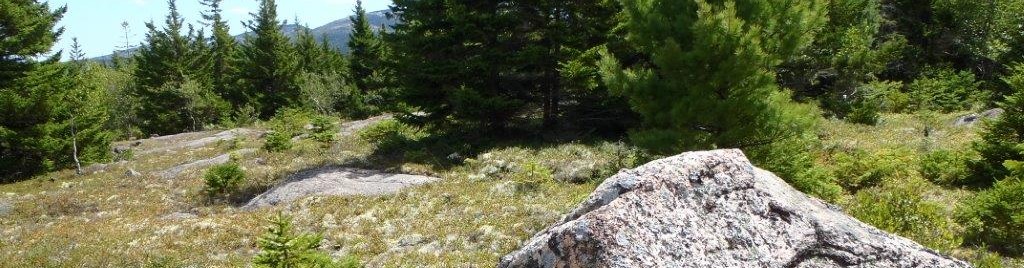
In a victory for the Trump administration, the US Court of Appeals in Boston on Thursday granted a temporary block of a federal judge’s order to restore signs on climate change, civil rights, and diverse communities at Acadia National Park and other national parks around the nation.
The Appeals Court decision also clears the administration to move ahead with extracting signs and displays on climate change, black history and other items that could “inappropriately disparage Americans,” as described in the president’s executive order, jeopardizing exhibits at the Nature Center at Acadia and an exhibit at the Schoodic Institute for being cleared. The lower court judge had ordered the administration to stop taking further action to remove interpretive materials pending further litigation in the matter.
The Appeals Court agreed to a request by the Interior Department and the National Park Service and granted a stay on US District Court Judge Angel Kelley’s June 12 order to reinstate the signs at Acadia and other parks by July 3.

These 10 tripod signs, including nine on climate change and one on the Wabanaki tribe, stored last year behind a building near outhouses and an old canoe by Acadia National Park, can remain hidden for now as a result of a US Court of Appeals ruling. The signs were put out of sight after the Interior secretary ordered them removed from Cadillac Mountain and the Great Meadow, saying they promoted improper partisan ideology.
The decision is a victory for the US Interior Department and the National Park Service and a defeat for the Coalition to Protect America’s National Parks, including the National Park Conservation Association and the Union of Concerned Scientists, which filed a lawsuit against Interior and the NPS in February, alleging Interior and the NPS violated certain federal laws by ordering the materials and signs at Acadia to be taken down.
The Appeals Court said that the Interior Department “met its burden” in asking for the stay of the order to restore 10 tripod signs at Acadia and interpretive items at other parks.
Appeals Court judges appointed by Presidents Obama and Biden
The judges who granted Interior’s motion for a stay were David J. Barron, chief appellate judge, a President Barack Obama appointee; and appellate judges Gustavo A. Gelpi Jr. and Julie Rikelman, both President Joe Biden appointees.

Sign on Acadia National Park’s Cadillac Mountain, which warned about the inevitable effects on plants in a warming climate, before its removal after President Donald J. Trump’s March 2025 executive order, saying park signs should not reflect “improper partisan ideology.”
The NPS at Acadia and other parks removed the signs based on a March 2025 executive order by President Donald J. Trump called “Restoring Truth and Sanity to American History.” Trump ordered Interior to take action within the law to ensure public monuments, memorials, statues, markers, or similar properties do not “inappropriately disparage Americans” or contain “improper partisan ideology.” Two months later, Interior Secretary Doug Burgum followed with a similar order to implement Trump’s requirements. Interior wrote to Acadia and ordered the signs at Acadia to be taken down from Cadillac and the Great Meadow.
In seeking a stay, attorneys for Interior said Kelley entered an order that censors the speech of the Executive Branch. They said Kelley’s order forces “the government to return to the prior administration’s viewpoint about the meaning of America…. But it is well settled that the government is free to select the views that it wants to express.”
“Plaintiffs have no right to particular interpretive materials,” attorneys for Interior wrote. “An interpretive sign’s presence or absence therefore has no material impact on Plaintiffs.”
Kelley found that Interior, in removing the exhibits, broke several federal laws including the National Park Service Centennial Act of 2016 which sought to improve visitor facilities and support conservation efforts. It required Interior to ensure the parks to make available “a broad program of the highest quality interpretation and education.” Besides the Centennial Act ,other laws that Judge Kelley said were violated by the exhibit removals included the Organic Act of 1916, the foundational law that created the NPS signed by President Wilson and the 1998 Omnibus Management Act, which overhauled management of the NPS system and was signed by President Clinton.
Acadia in September removed six signs on climate change and Wabanaki culture from Cadillac Mountain and four from the Great Meadow. The signs remain stacked up behind a building next to outhouses and an old canoe, with the only photographs of the stored signs taken by reporters for Acadia On My Mind. One of the one-of-a-kind photos made national news when they were briefly shown on CBS News Sunday Morning, during its March 22 segment entitled “Signs of the times: Removing stories of America’s past from our National Parks.”

US District Judge Angel Kelley (Photo courtesy of US District Court)
In a filing that opposed Interior’s bid for a stay pending appeal, lawyers for the coalition said the defendants’ request for the stay was asking to erase history and science from national parks. The coalition’s filing said a stay would “irreparably injure” members of the coalition and the public.
In her decision, which made national news, Kelley wrote that “telling the full truths of our shared story helps our Nation heal from past wrongs…. Because Defendants deemed it important to strip the parks of these undeniable truths in anticipation of the 250th Anniversary of our great Nation, it is equally important that our shared history be honestly told and fully restored by the 250th Anniversary to properly honor the remarkable achievements of the United States.”
With the Appeals Court granting of the temporary block on Kelley’s order, it now means there doesn’t have to be restoration of the signs before July 4, the 250th anniversary of the Declaration of Independence.
Also, media were flagged for review for removal by the NPS and was leaked to the public in March. According to an analysis by Save Our Signs, exhibits included in the internal review and face possible removal at Acadia include presentations at the Nature Center and the Schoodic Institute.
Acadia National Park should remind visitors of the human history of Acadia. It did not start when Champlain sailed by on his explorations.
Acadia’s visitors should also be reminded that human activities are changing the climate. This wonderful landscape will change as the climate changes and Acadia must adapt to those changes.
That said, the park’s administrators have a well established right to add or subtract or change signage. Champlain changed the place called Pemetic by the Wabanaki to what is called Mount Desert Island today. As Acadia’s first superintendent, George Dorr changed the names of several local landmarks to honor 17th century French history, not the Wabanaki or local inhabitants. After Dorr’s passing, the mountain next to Cadillac mountain, formerly Green mountain until Dorr changed its name, was named Dorr mountain.
Removing the signs was regrettable but legal.
Great comment, Jim. A trial in this lawsuit in Boston would be fun to cover. It looks like the Trump administration also might have authority to take down the remaining exhibits in the Nature Center. Some exhibits, including one with Nan Lincoln, have already been extracted and replaced with a cashier for a new bureau of The Park Store. The Nature Center climate warming exhibits in the Nature Center have been up for 10 years and were intended to be permanent. Many exhibits still remain in the back but they have a bull’e eye on them under the Appeals Court decision. How would you feel if those remaining signs in the Nature Center are also taken down in the weeks ahead? Besides the Centennial Act mentioned in our story, other laws that Judge Kelley said were violated by the Trump admin’s sign removals included the Organic Act of 1916, the foundational law that created the NPS signed by President Wilson and the 1998 Omnibus Management Act, which overhauled management of the NPS system under President Clinton.
Reading through every sign pictured in the article, it’s tough to find much dramatically non-factual information on these signs. Having seen and read every pictured sign in person, as the only video documentor of hiking every mile of every official trail in the park, I believe good and accurate signage is important to the incredible experience of a visit to Acadia. Whether it’s your first time, an annual pilgrimage, somewhere in between, or you are a local… the signage helps understanding and reinforces the FACT that this land is and always has been special.
Signage should be changed as we attain new information, but having a consistent presence of the most accurate information we have makes the Acadia experience complete. Inevitably, there will be a final decision in the court system. Regardless of what side of this issue people find themselves on, a yo-yo battle over these signs being in place is good for nobody. However, this is the way we work through things in our country. Other places do not have such opportunity for appeal or national parks at all.
It is tragic to have to watch this play out in front of us. To watch signs, which were a great addition to the educational value of visiting the park since my first time here 40 years ago, disappear overnight is saddening to me. As this plays out remember to remain calm, support our special and unique park, and voice your opinion in a respectful way. And always appreciate Acadia for the special, unique, and wicked awesome place that it is!
Thanks for the comment, Brian.
Trump is the President. The SCOTUS already ruled that his administration has ultimate authority to run the country and that local jurisdiction judges have no say in anything. Climate change was a hoax.
Thanks for the comment, Dan.